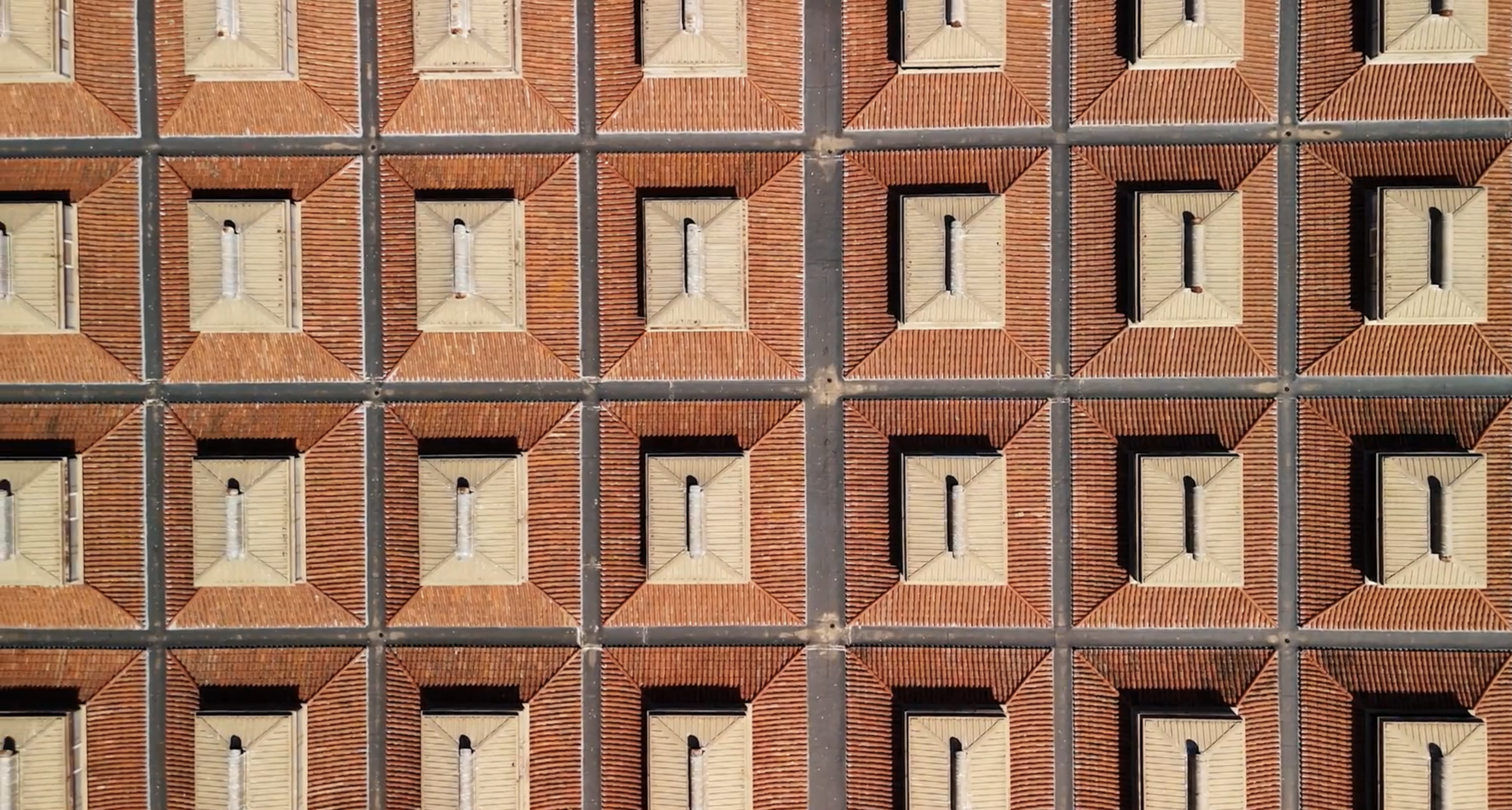
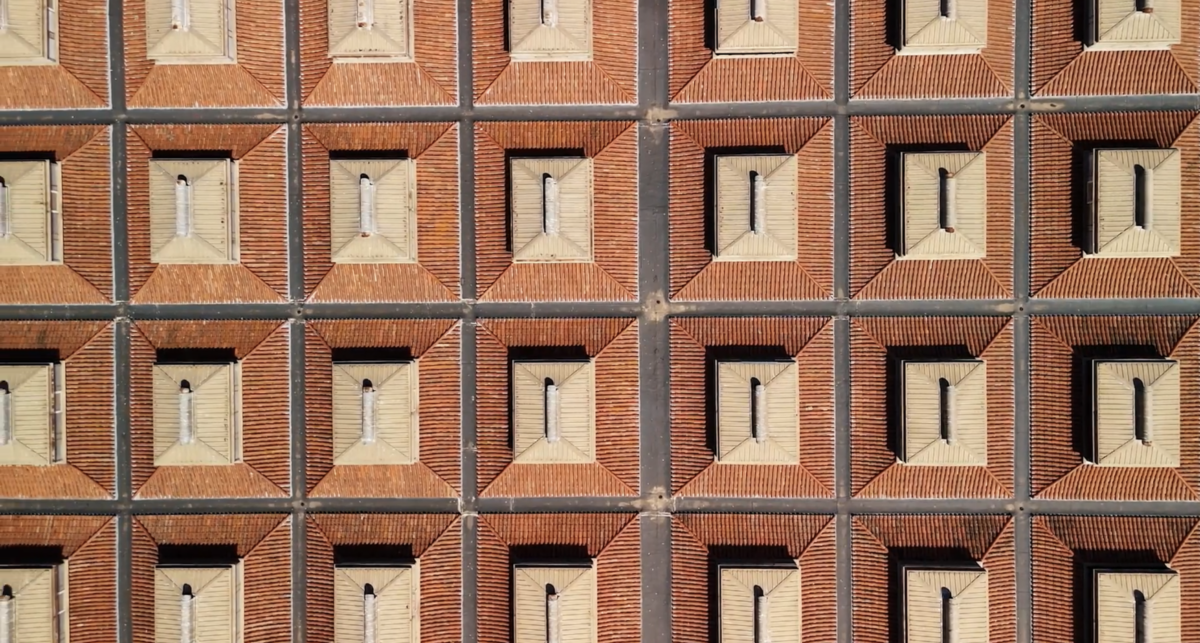
The extension of the Museu Nacional d’Art de Catalunya encompasses the restoration and heritage conservation of the Palau Victòria Eugènia, designed by Josep Puig i Cadafalch, alongside the reorganisation of key spaces within the existing Palau Nacional and the creation of a functional link between the two buildings. The result will be a single, fully integrated Museum, capable of delivering the full spectrum of its heritage, artistic and public service missions with the ambition and impact expected of an internationally recognised institution.
Graphic representation of the architectural project
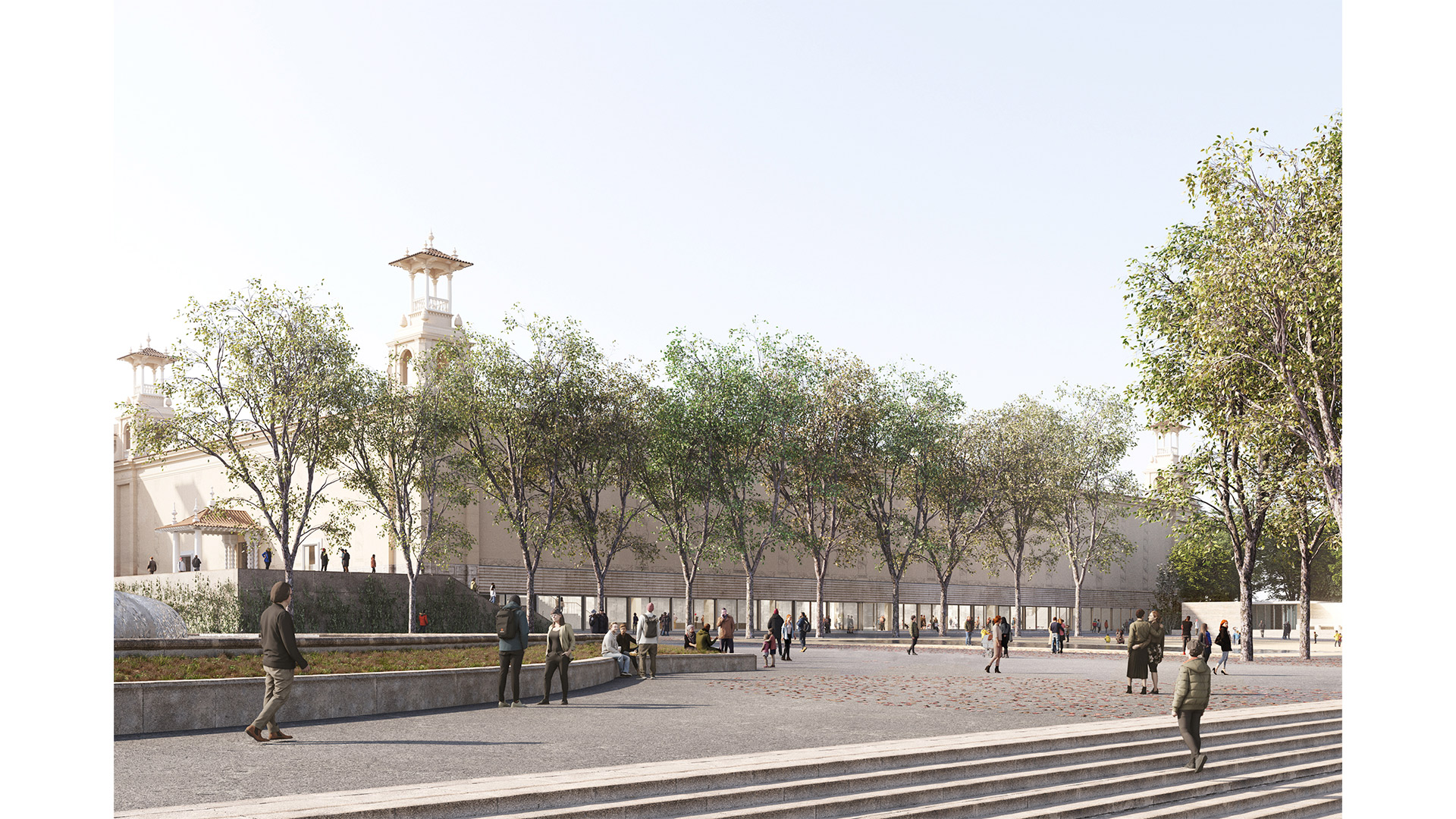
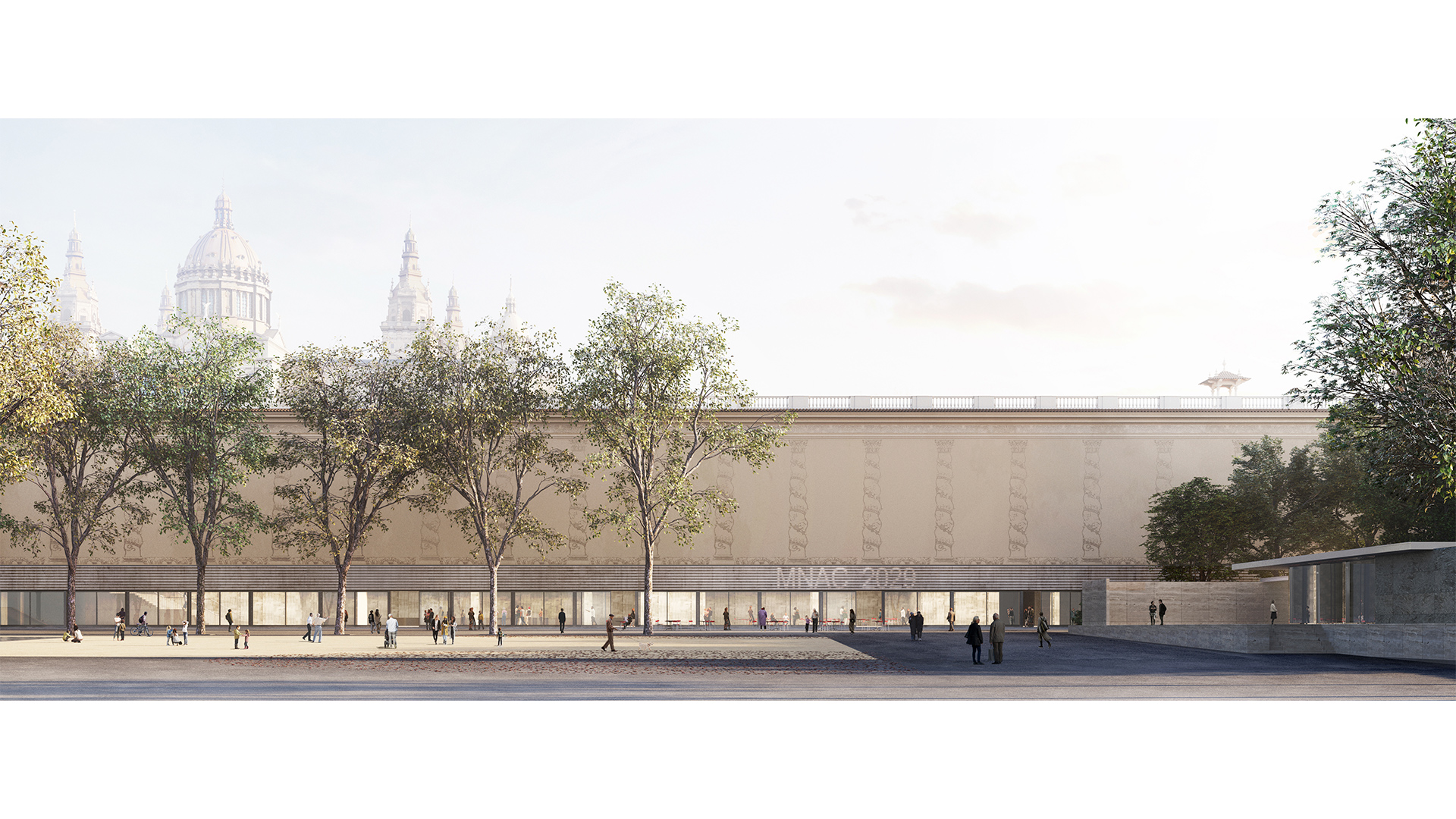
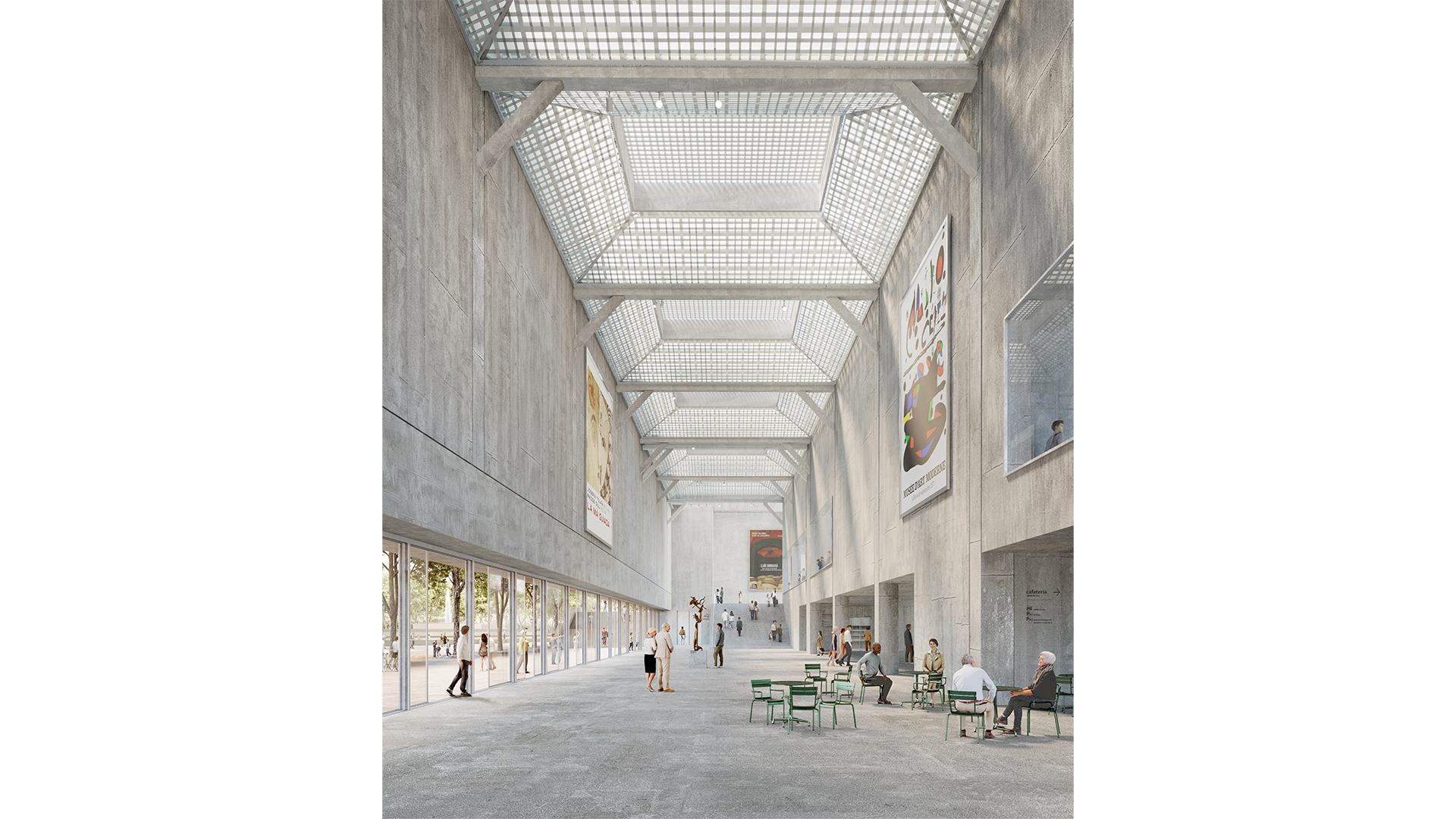
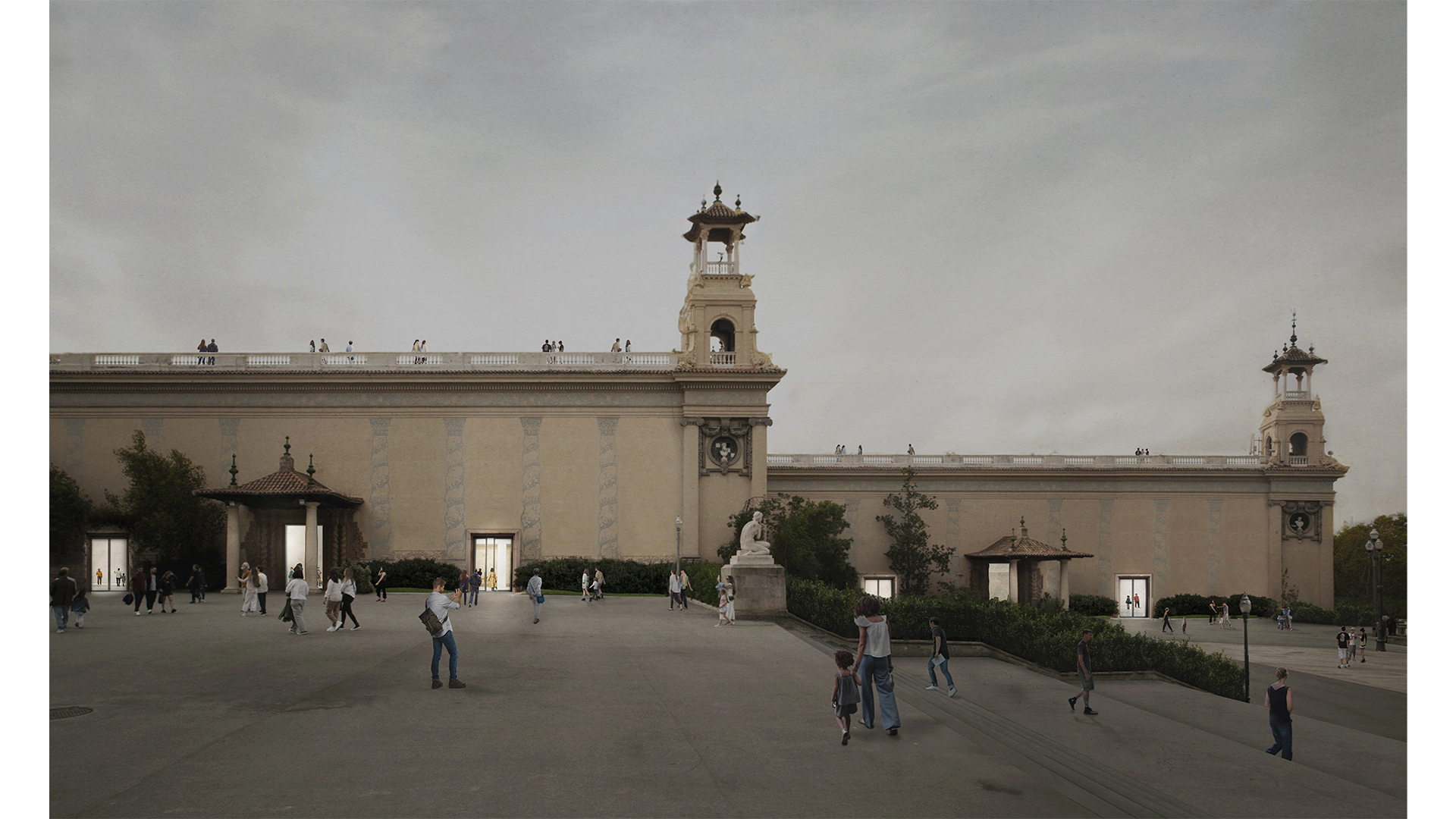
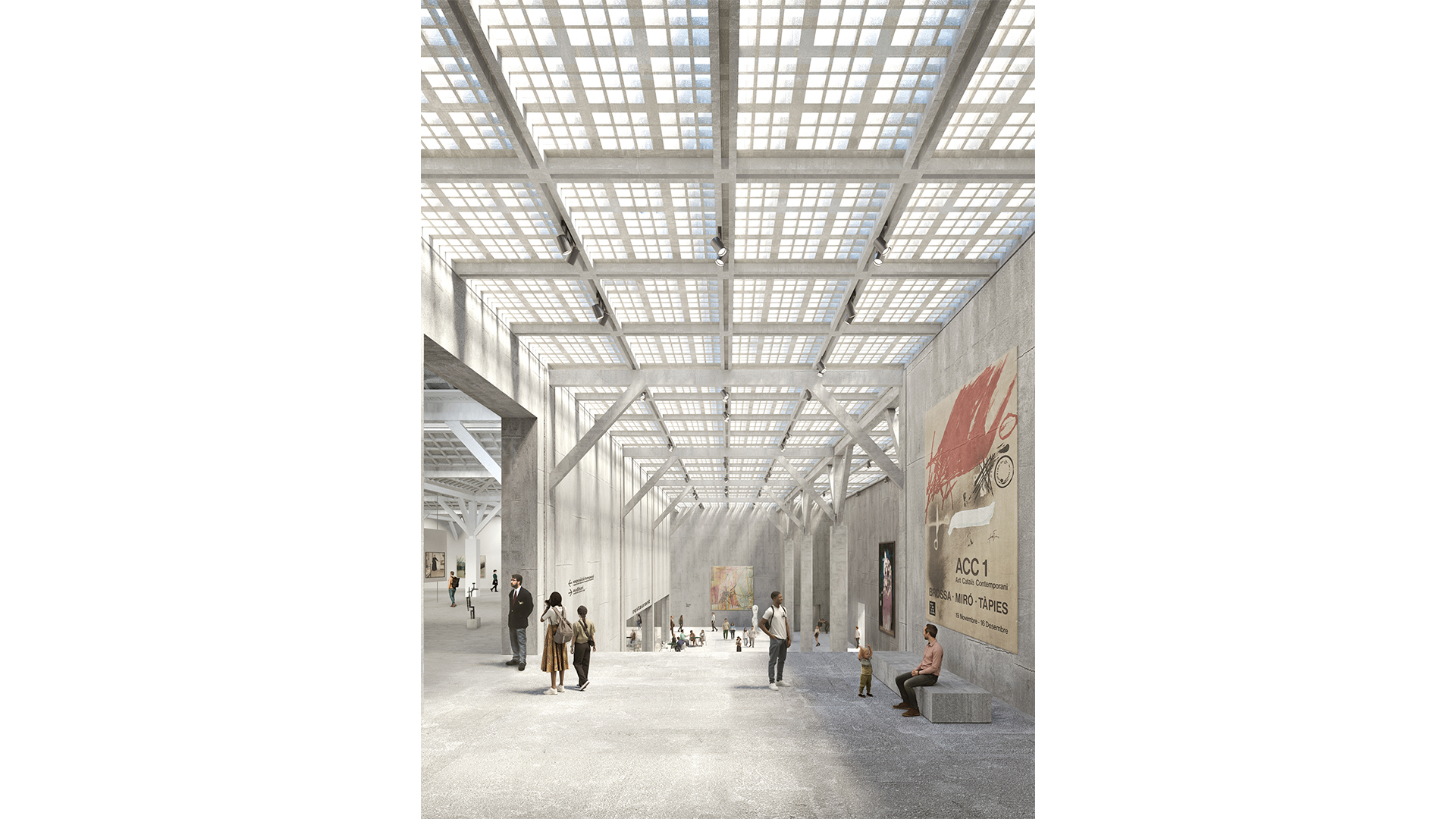
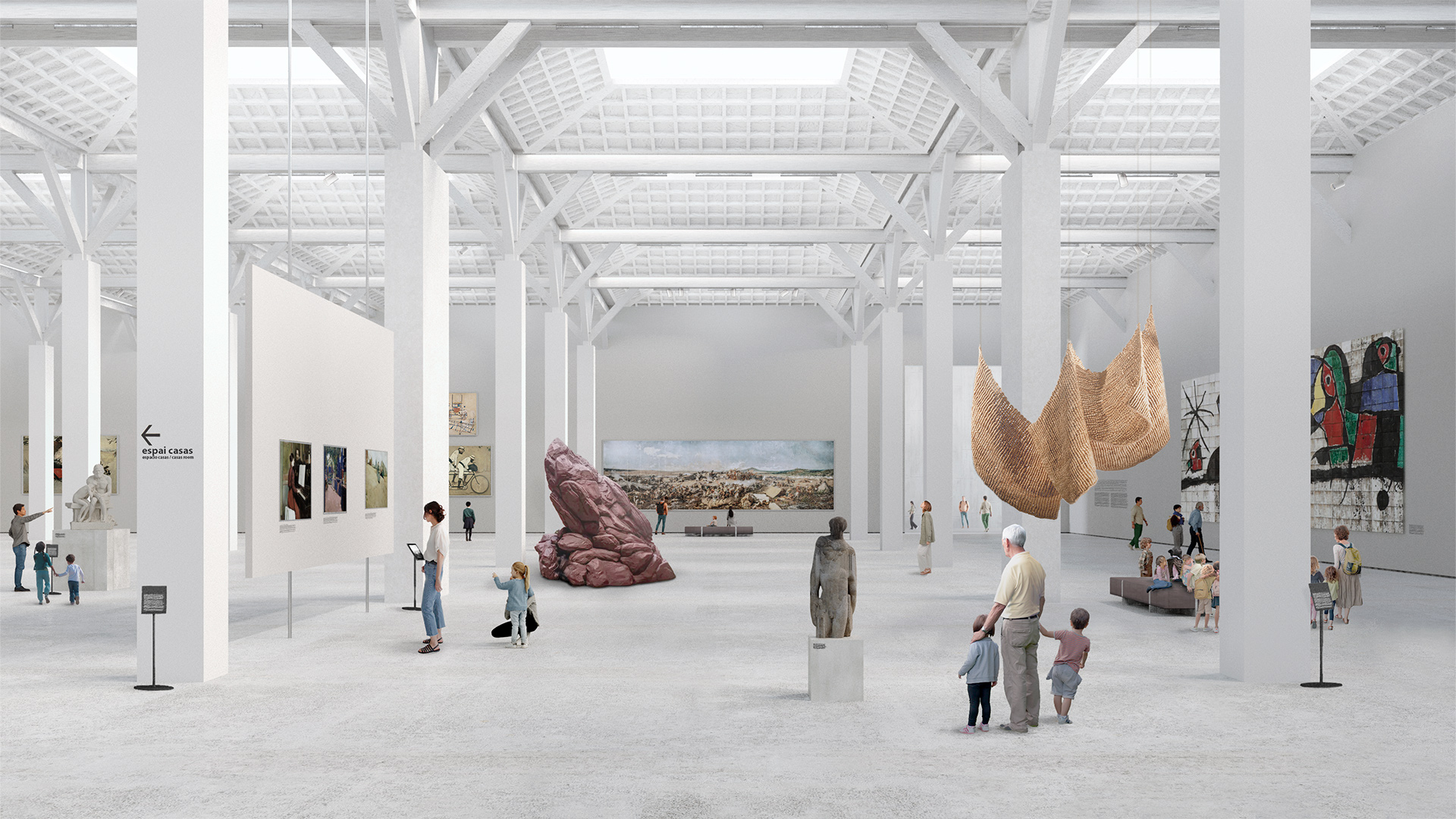
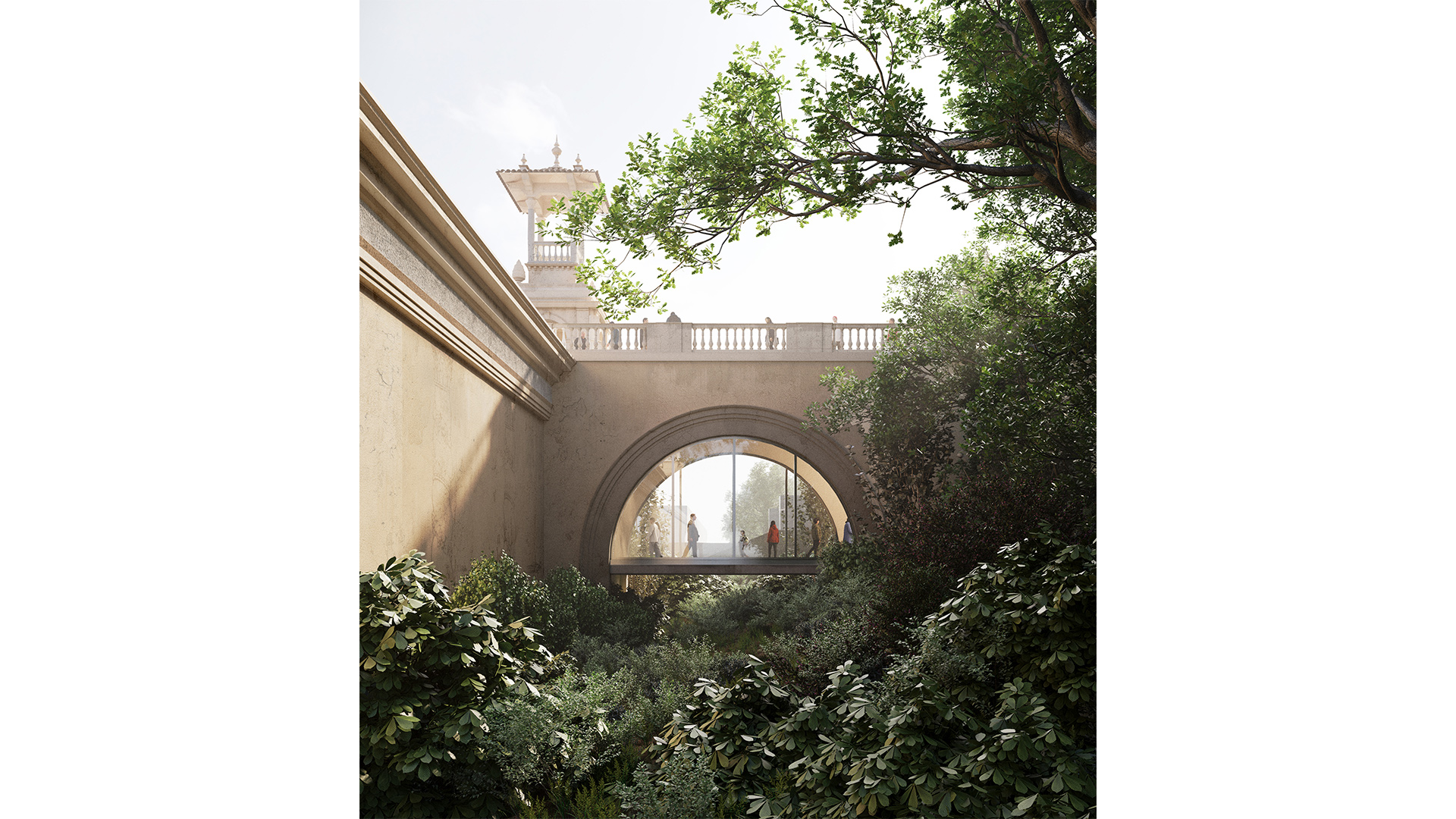
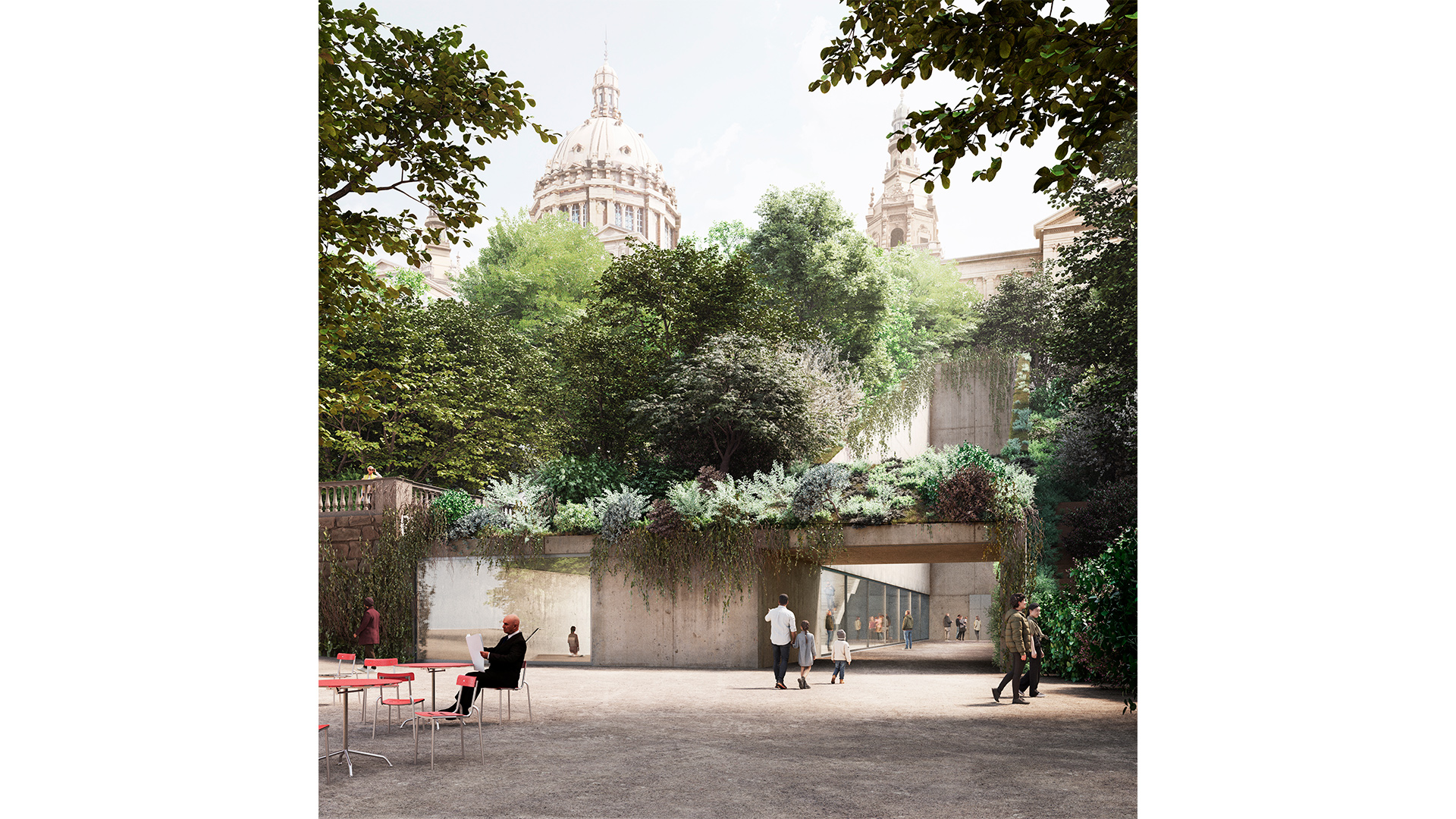
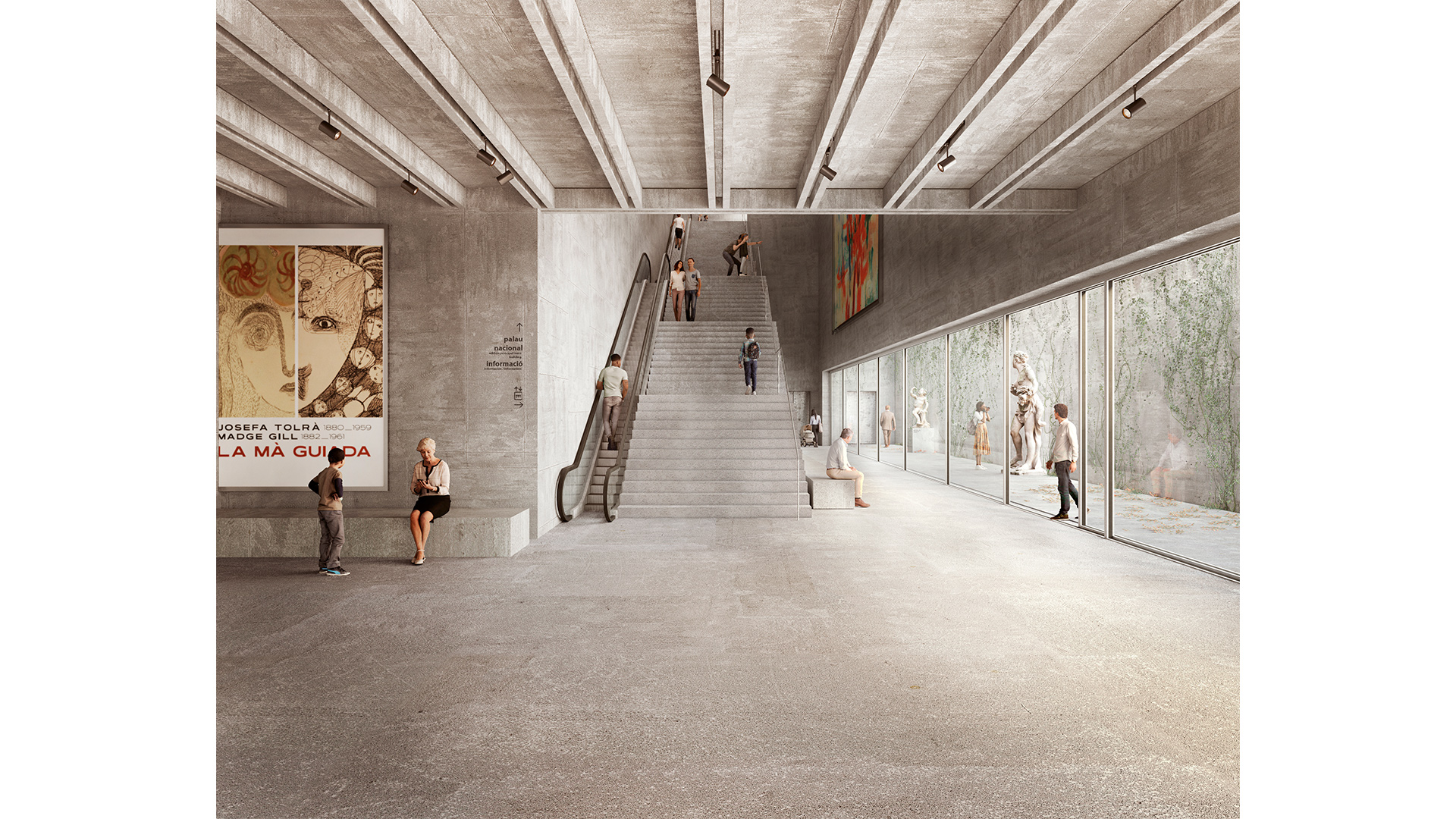
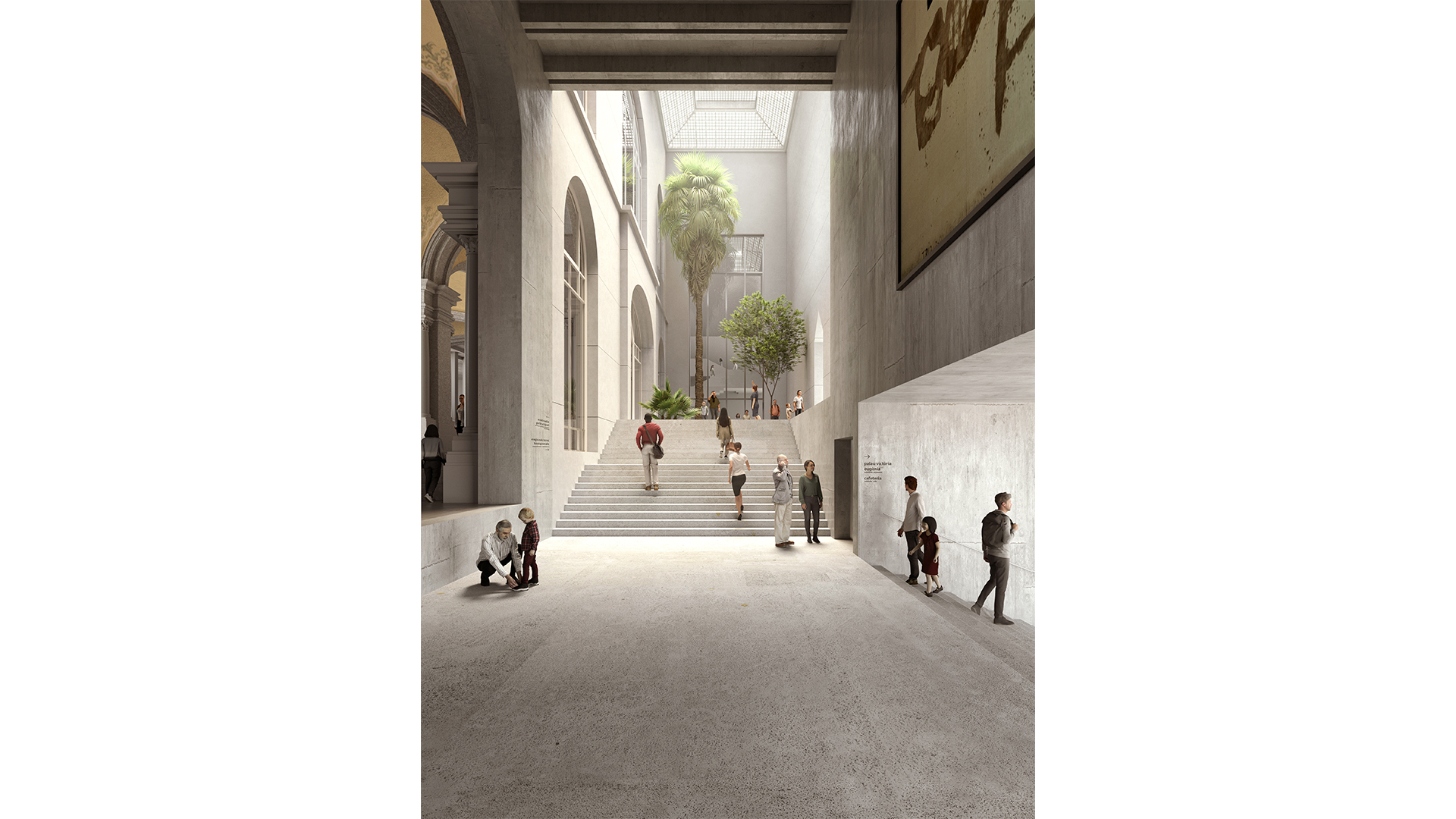
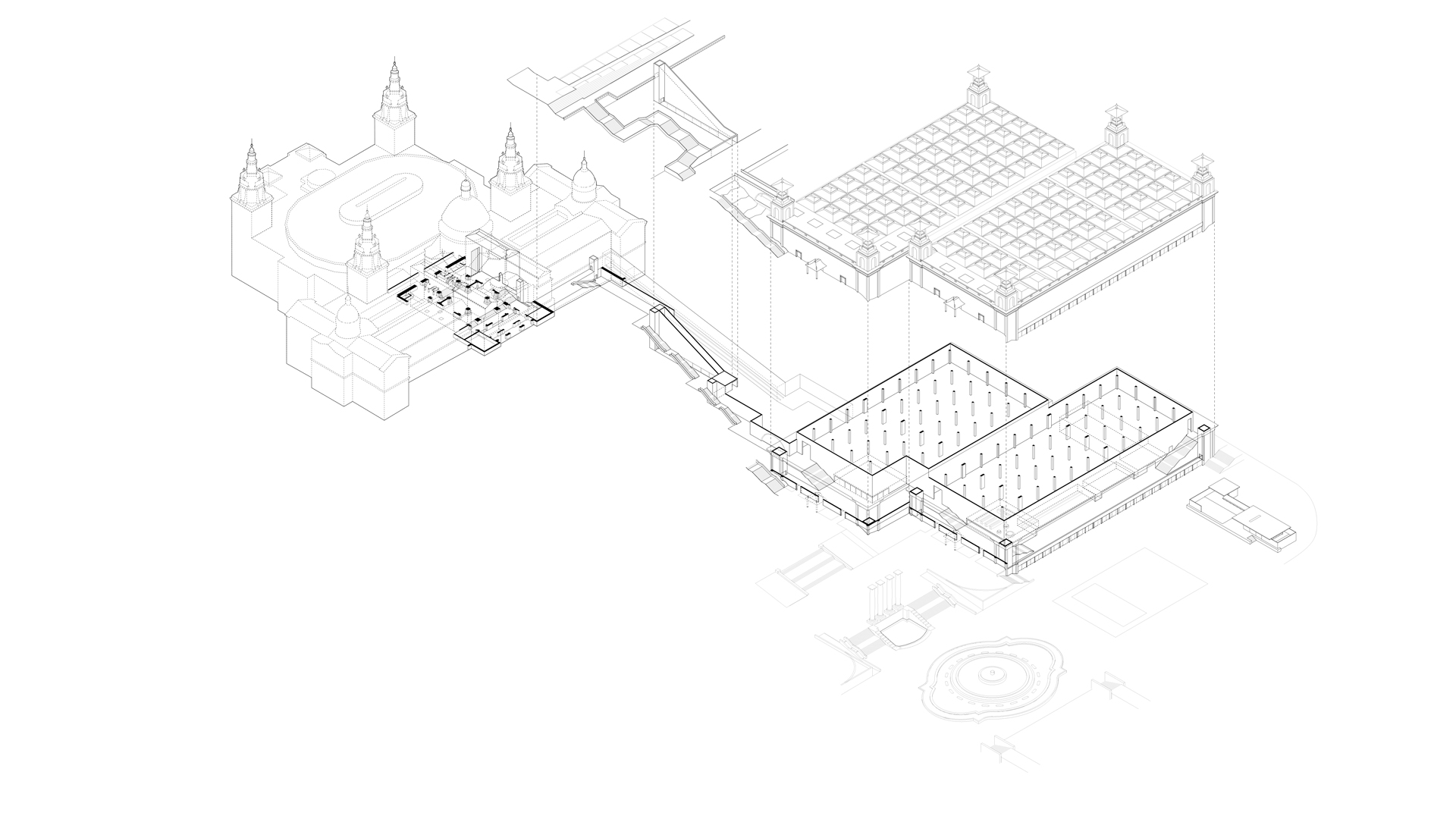
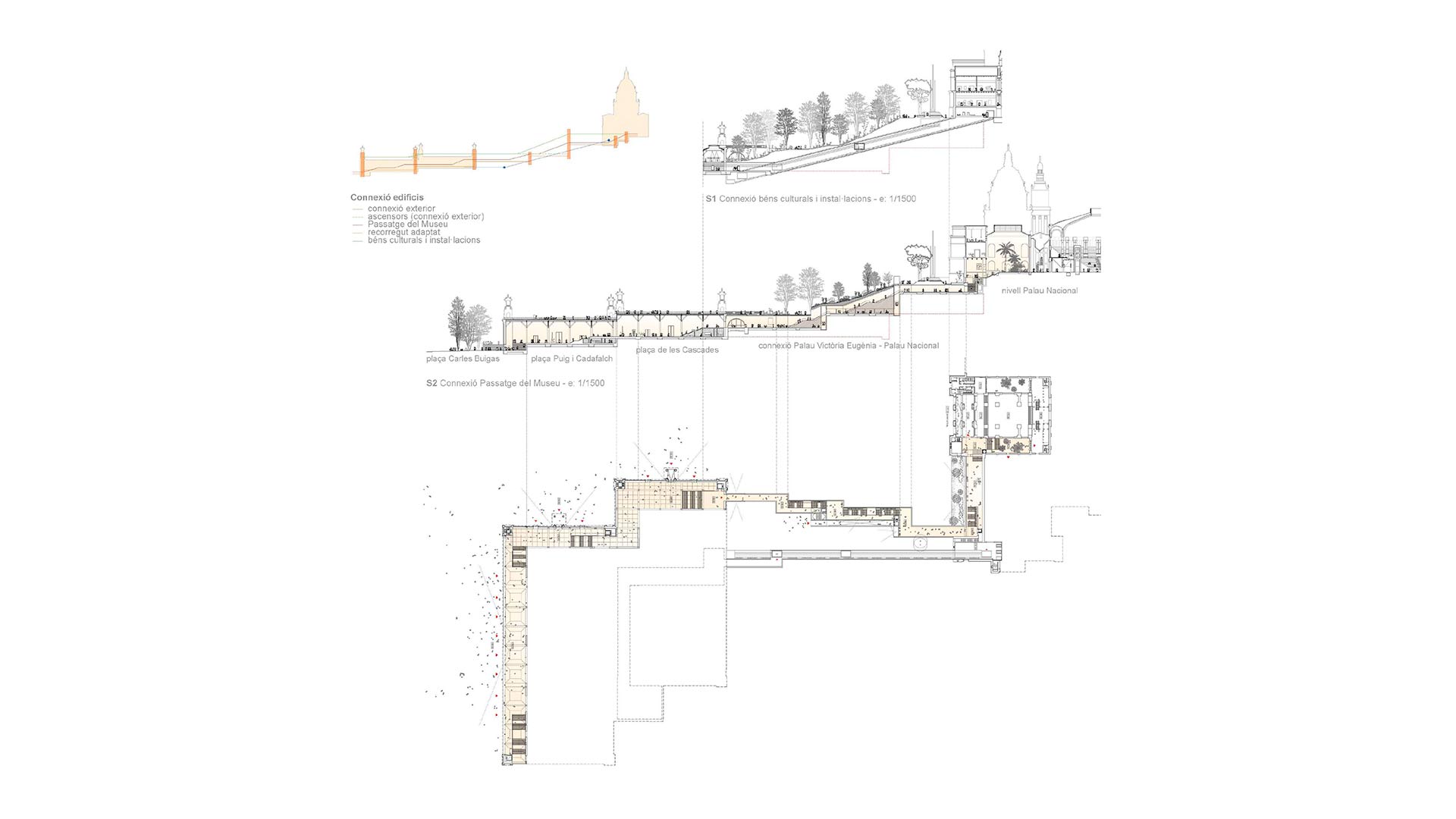
By extending and reorganising its spaces, improving access and achieving closer integration with the surrounding urban fabric, the Museum will be better placed to meet the diverse needs of communities, society and the cultural sector. This will provide the tools and spaces necessary to consolidate and project its role as a leading European museum, serving the people of Catalonia.
Principles of the architectural project
A covered corridor will link the two palaces, creating a unified spatial experience and connecting the entrance hall of the Palau Victòria Eugènia with the interior of the Palau Nacional. Fully accessible, this corridor will function as a covered boulevard capable of hosting independent uses – such as an auditorium or community spaces – while also providing a direct connection to the surrounding urban environment.
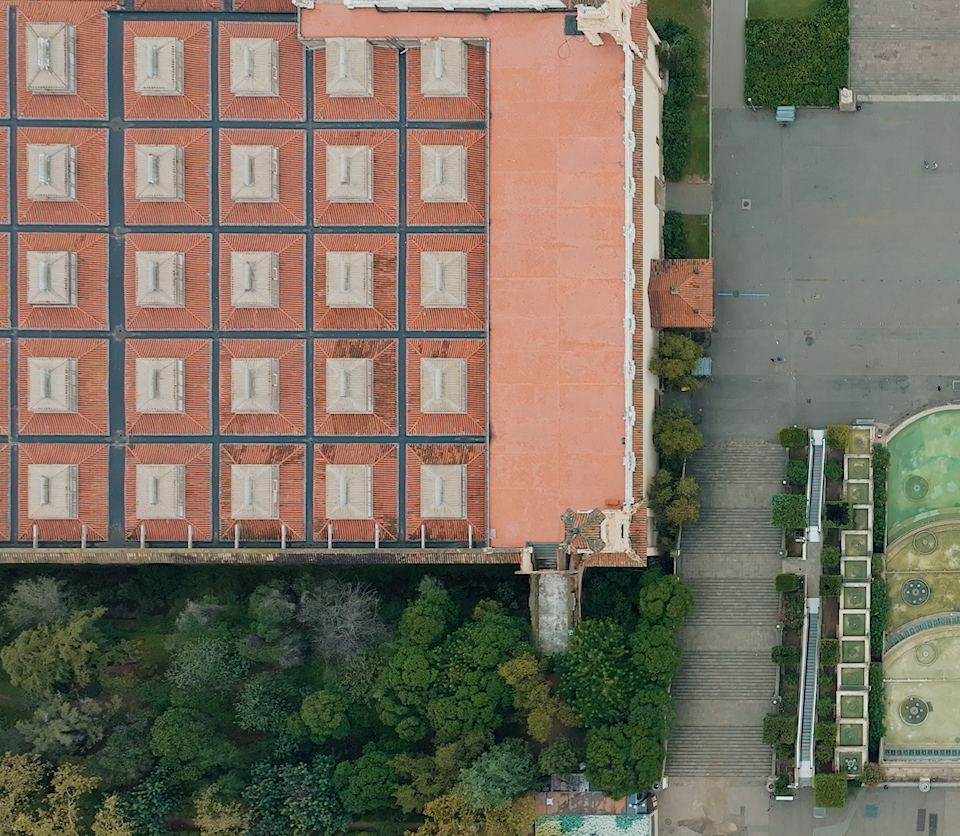
The project restores and breathes new life into the Palau Victòria Eugènia, a historic building designed by Puig i Cadafalch and inaugurated in 1923. Its architectural forms, spaces and historic significance are highlighted and enhanced, while being carefully adapted to meet the Museum’s operational and cultural needs.
The layout, quality of the spaces, clear organisation and connection with the exterior ensure the visitor experience is maximised and the Museum remains accessible and engaging for all.
The project addresses the Museum’s continuing need to be adaptable. Exhibition spaces are highly versatile, able to meet current needs while remaining flexible for future programmes.
The Museum’s operational requirements are met efficiently, in line with sustainability and performance standards, through a minimal and respectful intervention that preserves the integrity of the existing architecture.
The competition
The project submitted by HARQUITECTES and Christ & Gantenbein, titled Museum Passage, was unanimously selected as the winner of the design competition organised by the Museu Nacional d’Art de Catalunya.
The competition was conducted in two anonymous phases and received thirty initial proposals from sixty-five studios across ten countries. Five of these were shortlisted to participate in a second, remunerated stage. The jury, two-thirds of whom were architects, included representatives from the Generalitat Government of Catalonia, the Spanish Ministry of Culture and Barcelona City Council – the administrations forming the Museum’s Board – as well as members of the Col·legi d’Arquitectes de Catalunya and the Museum itself.
The jury unanimously chose the HARQUITECTES and Christ & Gantenbein proposal, noting that it successfully meets both functional requirements and the sustainability and efficiency standards set out in the competition brief. They also particularly commended the way it opens the Museum to the city, reinforcing its role as a welcoming public space.
The winning design conceives the Palau Nacional and the Palau Victòria Eugènia as a single, integrated Museum through a covered passage linking all spaces, from the entrance hall of the Palau Victòria Eugènia to the interior of the Palau Nacional. This intervention not only increases exhibition space but also realises the Museum’s mission as a national institution representing Catalan artistic creation. It enables the Museum to respond to the needs of diverse communities, society and the cultural sector, while reinforcing and expanding its public service role. The project also honours the uniqueness of the Palau Victòria Eugènia, adapting the historic building to meet both current and future Museum requirements.
Jury decision
“The jury unanimously awarded the highest score to the Museum Passage proposal. They praised it for fully embodying the Museum’s values as a welcoming institution serving the public. Special recognition was given to the way it engages with its surroundings, opening the Museum to the city and vice versa.
The proposal highlights the volumetric, spatial and heritage characteristics of the Palau Victòria Eugènia, skilfully adapting the historic building to meet the Museum’s evolving needs. The flexible design of the spaces, particularly the exhibition areas, was noted as a major strength, allowing the Museum to accommodate current requirements while remaining adaptable for future programmes. Moreover, the proposal stands out for its thoughtful layout and multifunctional use of space, enabling the Museum to maximise the visitor experience.
Overall, it effectively addresses both the functional needs of public use and Museum operations, while fully meeting the sustainability and efficiency standards set out in the competition brief.”
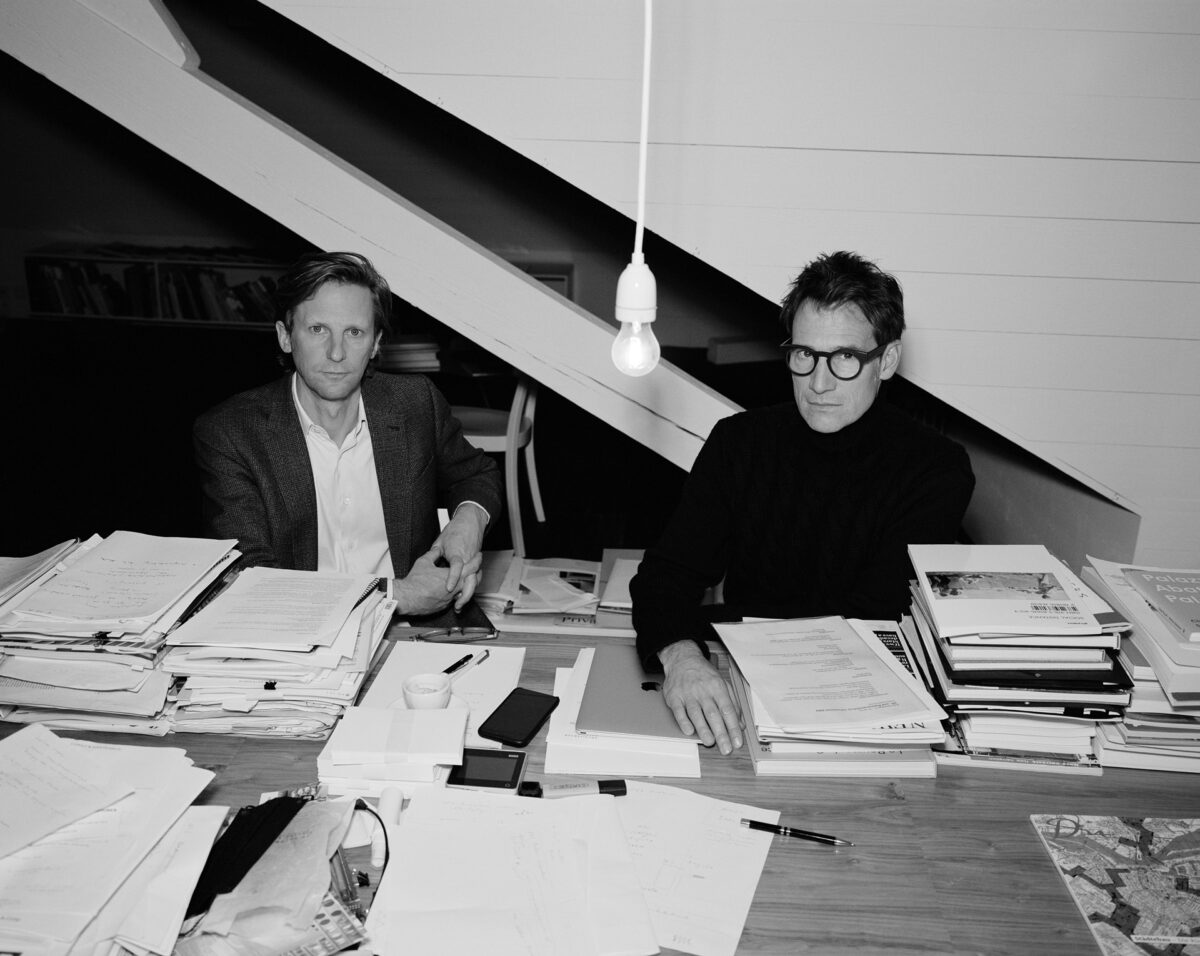
Design team
HARQUITECTES
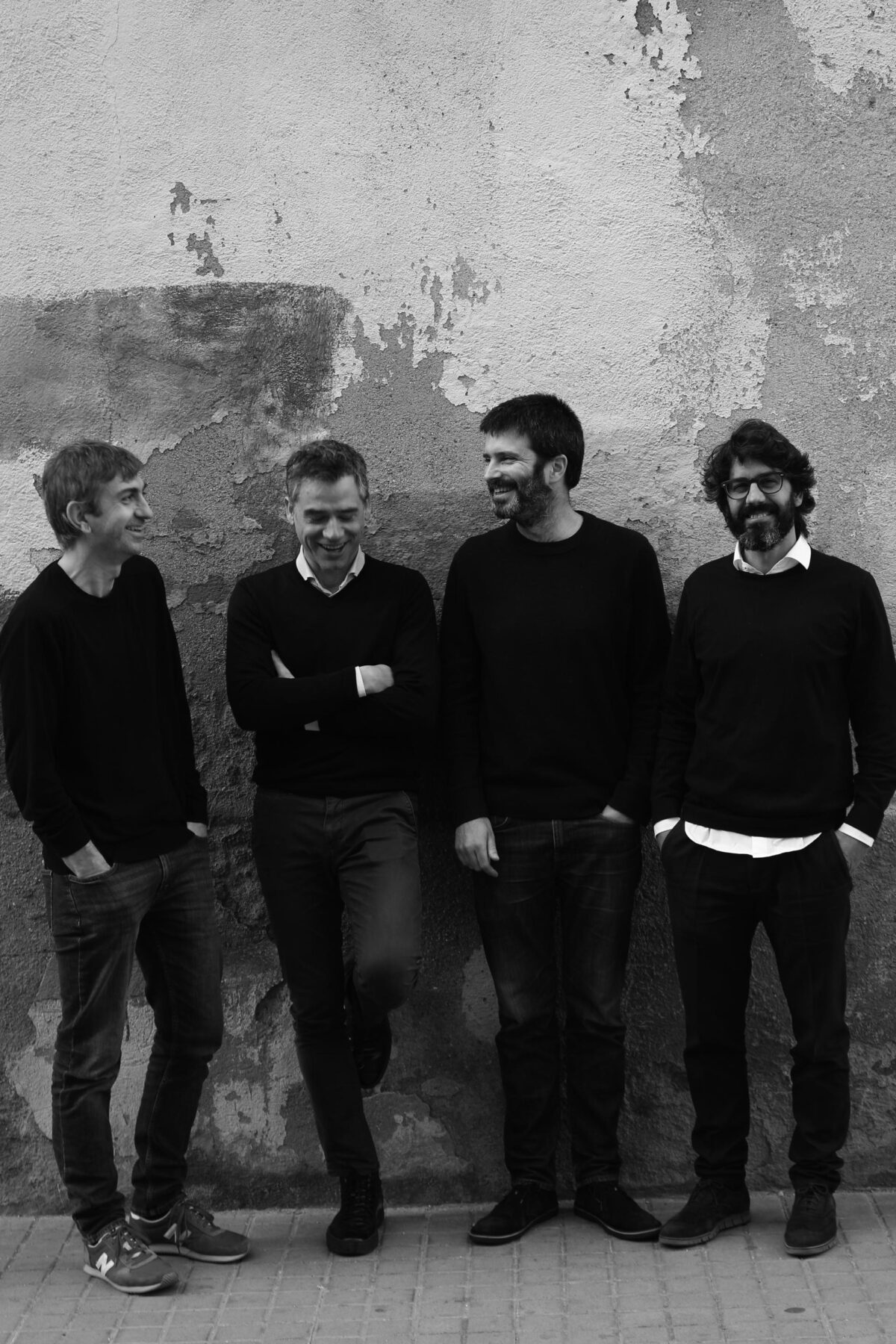
Founded in 2000 by David Lorente, Josep Ricart, Xavier Ros and Roger Tudó, this studio combines professional practice with teaching at the School of Architecture of the Universitat Politècnica de Catalunya (ETSAV and ETSAB), as well as at ETH Zurich and Harvard GSD.
Their most notable projects include the ICTA-ICP research centre at the Universitat Autònoma de Barcelona, the Cristalleries Planell civic centre, the Lleialtat Santsenca cultural centre, social housing for IMPSOL in Gavà, the new offices for Galenicum, the Clos Pachem winery in El Priorat and El Vapor Cortès for Prodis in Terrassa.
The studio is currently working on the MACBA museum extension, the rehabilitation of the Teatre Arnau, the La Teixonera civic centre in Vall d’Hebron and projects for the Ideal Flor cultural centre and the transformation of La Foneria Reial, all in Barcelona.
Their work has been widely published and exhibited and has received numerous awards, including the FAD Prize, the European Award for Architectural Heritage Intervention, the City of Barcelona Prize, the Erich Mendelsohn Award, the Berlin Art Prize and the CSCAE Architecture Prize.
CHRIST & GANTENBEIN
Christ & Gantenbein is an international architecture firm founded in 1998 by Emanuel Christ and Christoph Gantenbein, with offices in Basel and Barcelona. The firm comprises around 100 professionals from more than 20 countries and works on projects of all scales and types, from cultural institutions and infrastructure to housing, workplaces and urban masterplans.
Their most prominent projects include the extension of the Swiss National Museum in Zurich and the extension of the Kunstmuseum in Basel, both landmark interventions that integrate contemporary architecture into historically significant contexts. Other notable works include the Lindt Home of Chocolate in Zurich and the multifunctional Roche building in Germany.
Current projects include the MACBA extension in Barcelona, the Wallraf-Richartz Museum extension in Cologne, the new Kistefos Museum in Norway, the renovation of the main Kunstmuseum building in Basel, the rehabilitation of the Swiss National Library in Bern and the redevelopment of the University Hospital Zurich campus.
At Christ & Gantenbein, practice and research are closely intertwined. Since 2018, Emanuel Christ and Christoph Gantenbein have been full professors at ETH Zurich and have held academic posts internationally at institutions such as Harvard GSD, the Accademia di Architettura in Mendrisio and the Oslo School of Architecture and Design. Their work has been widely published and exhibited internationally.
Technical specifications
Three complementary interventions
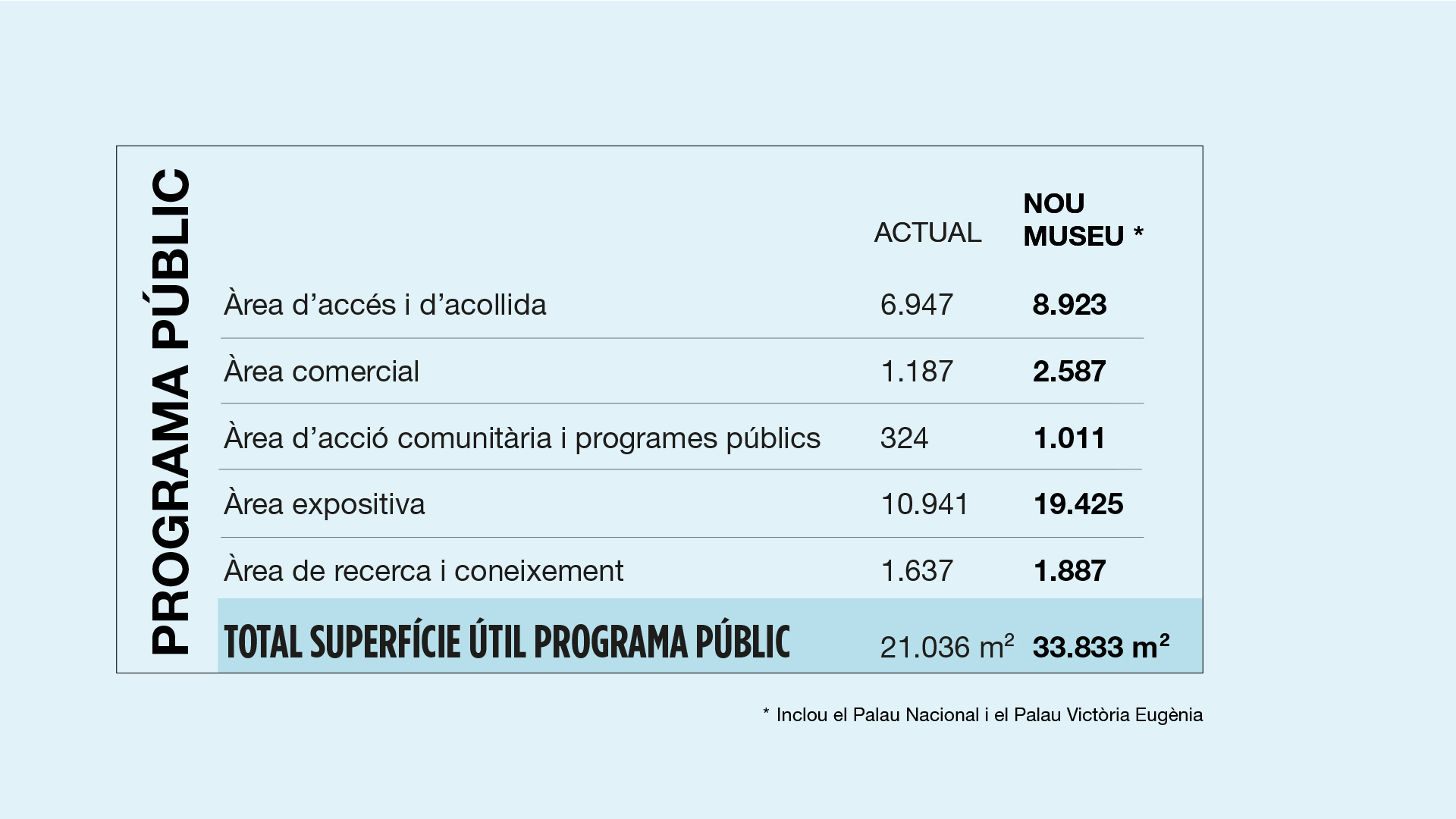
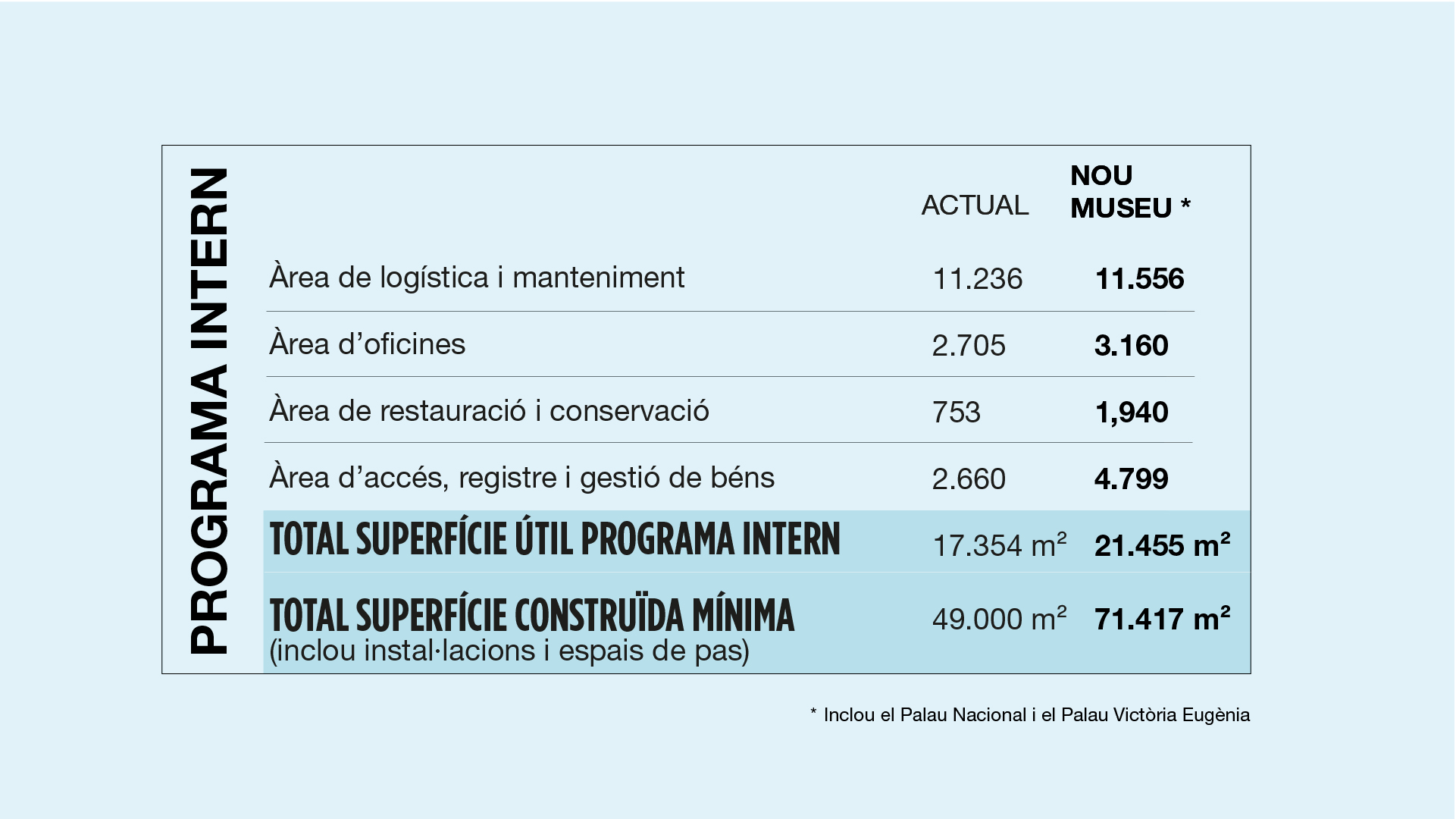
Floor area overview
For optimal viewing on mobile devices, click to download the technical sheet.
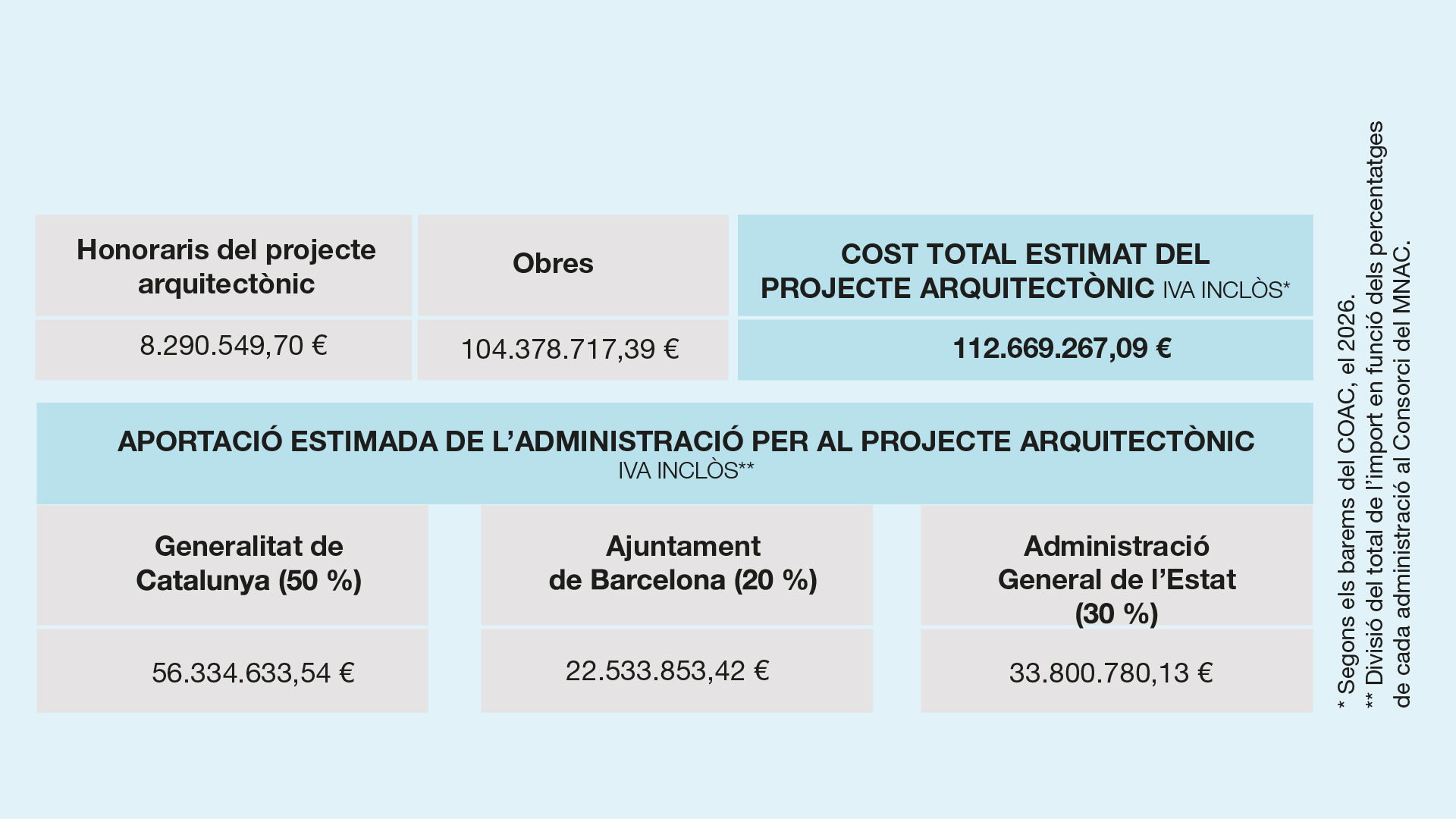
Estimated budget
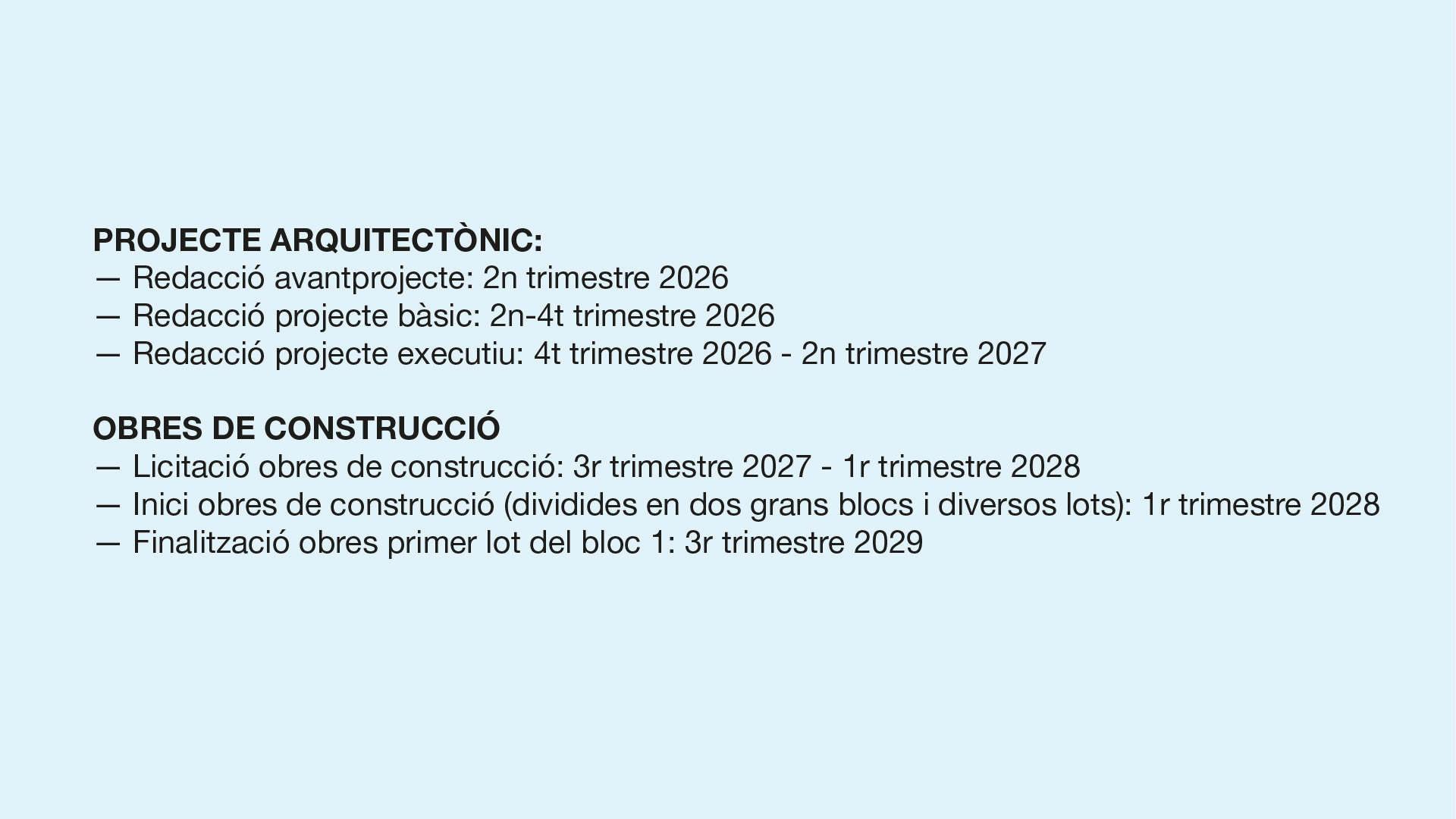
Estimated timeline
You may also be interested in…
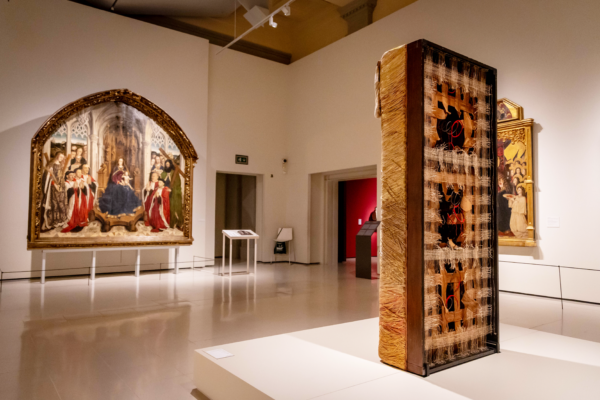
Curatorial project
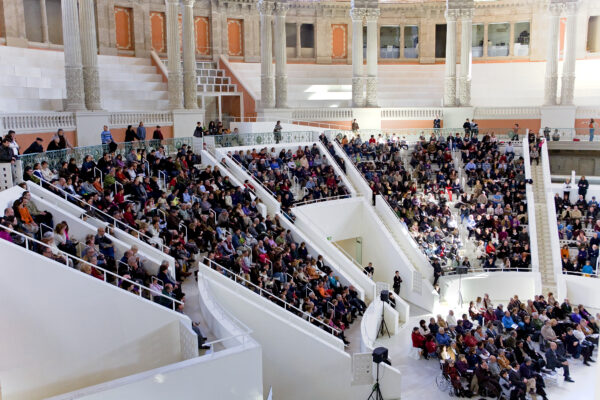
Public programme
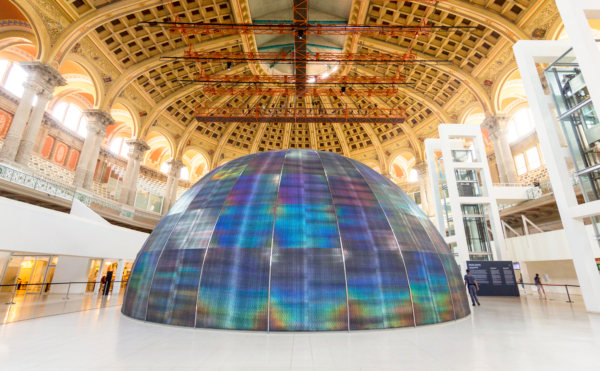
A ten-point case
Discover more on the Canal +MNAC. Discover more on the Canal +MNAC. Discover more on the Canal +MNAC. Discover more on the Canal +MNAC. Discover more on the Canal +MNAC. Discover more on the Canal +MNAC.